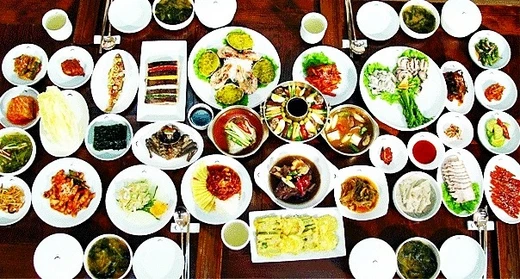
Adzuki bean
A small bean central to East Asian cuisine and agriculture.

Wikipedia / Wikimedia Commons
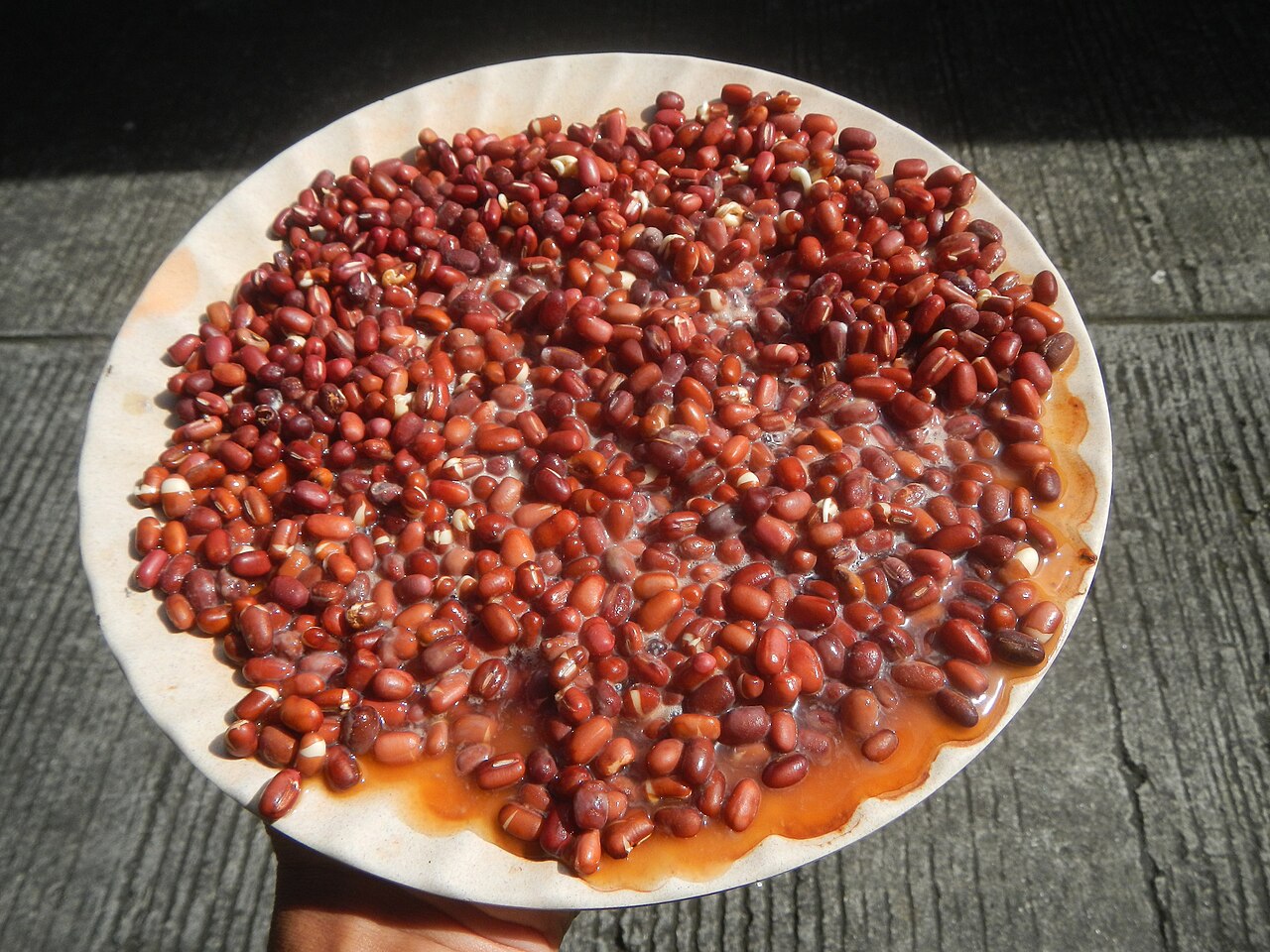
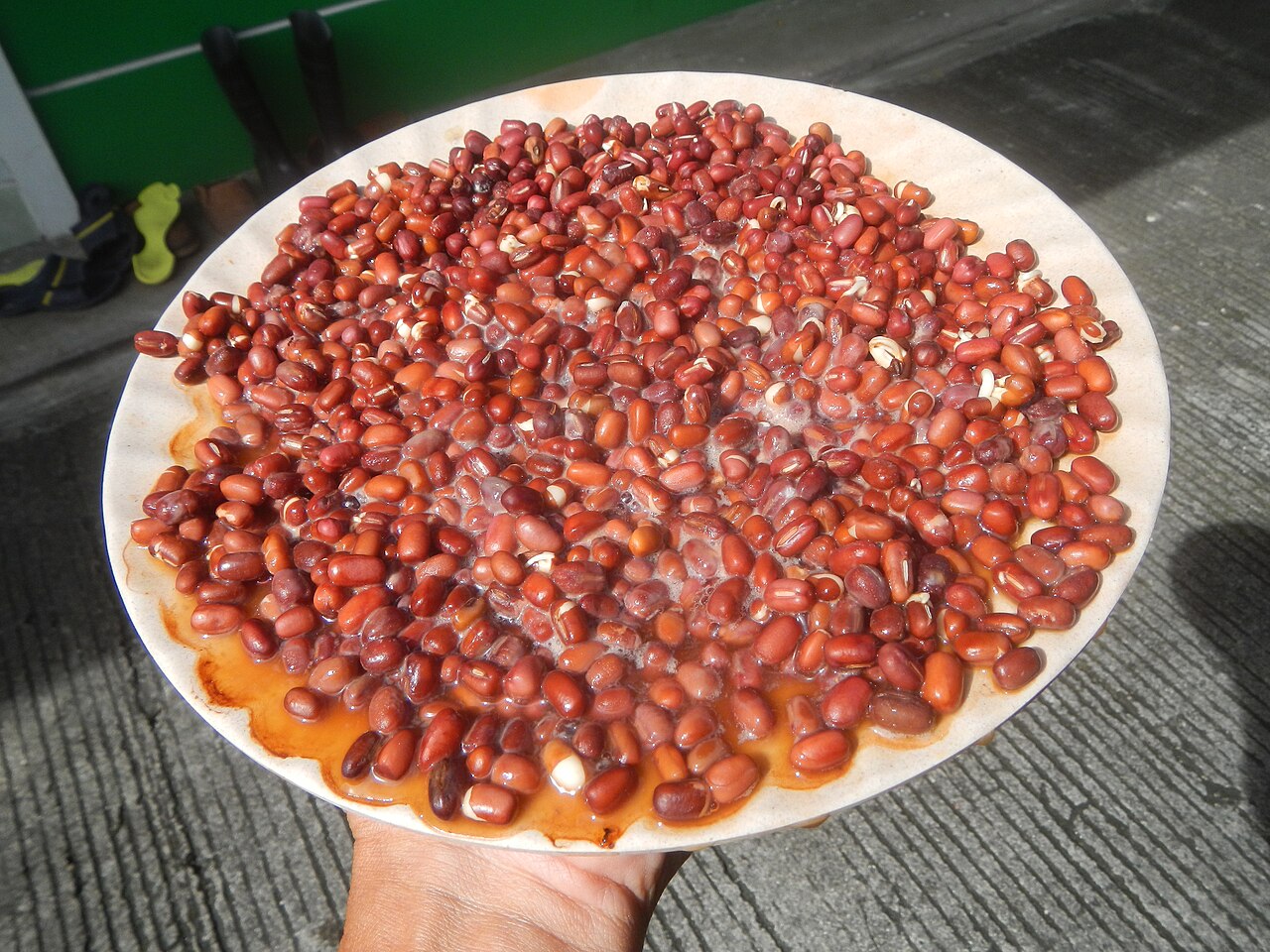
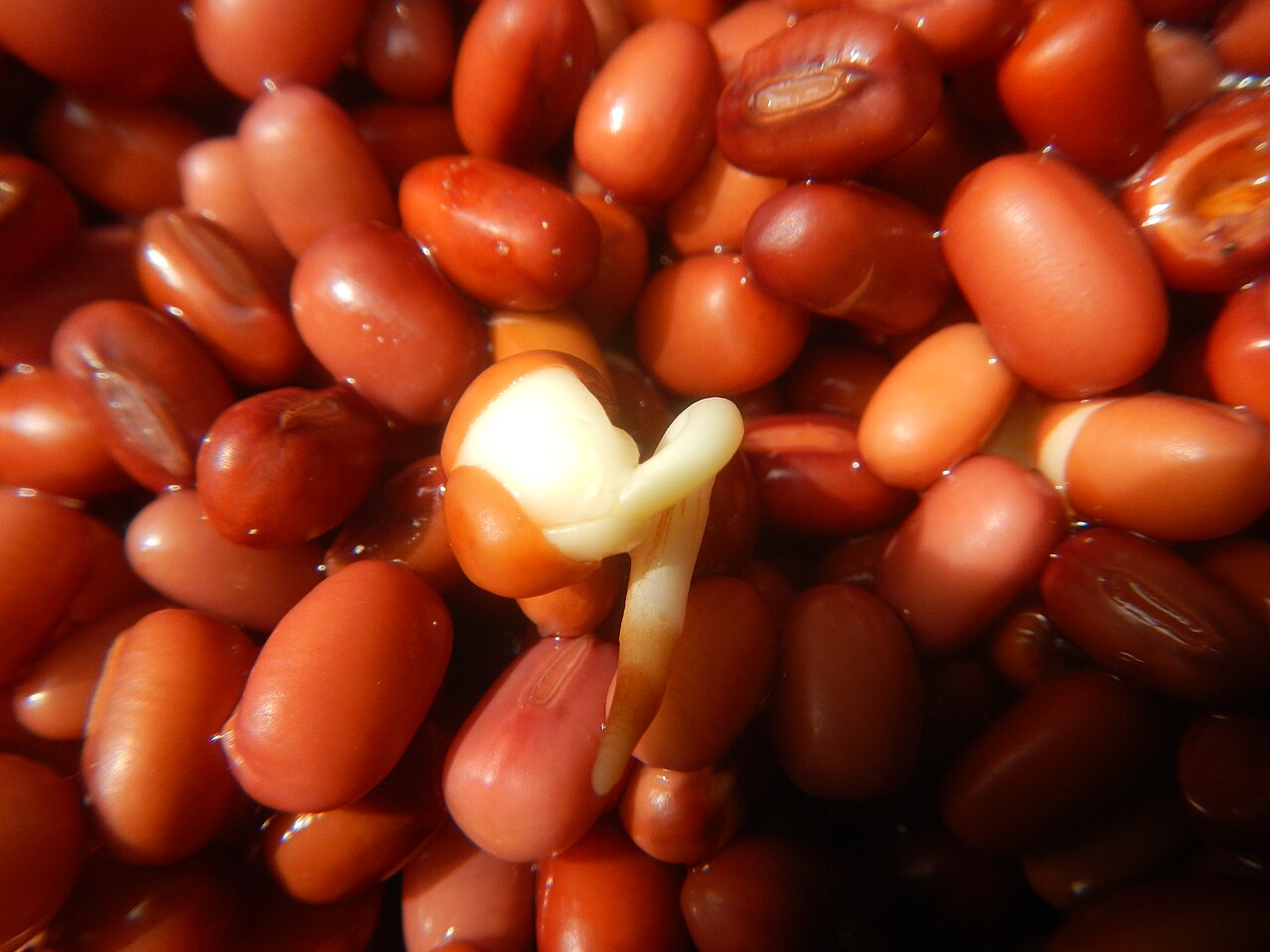
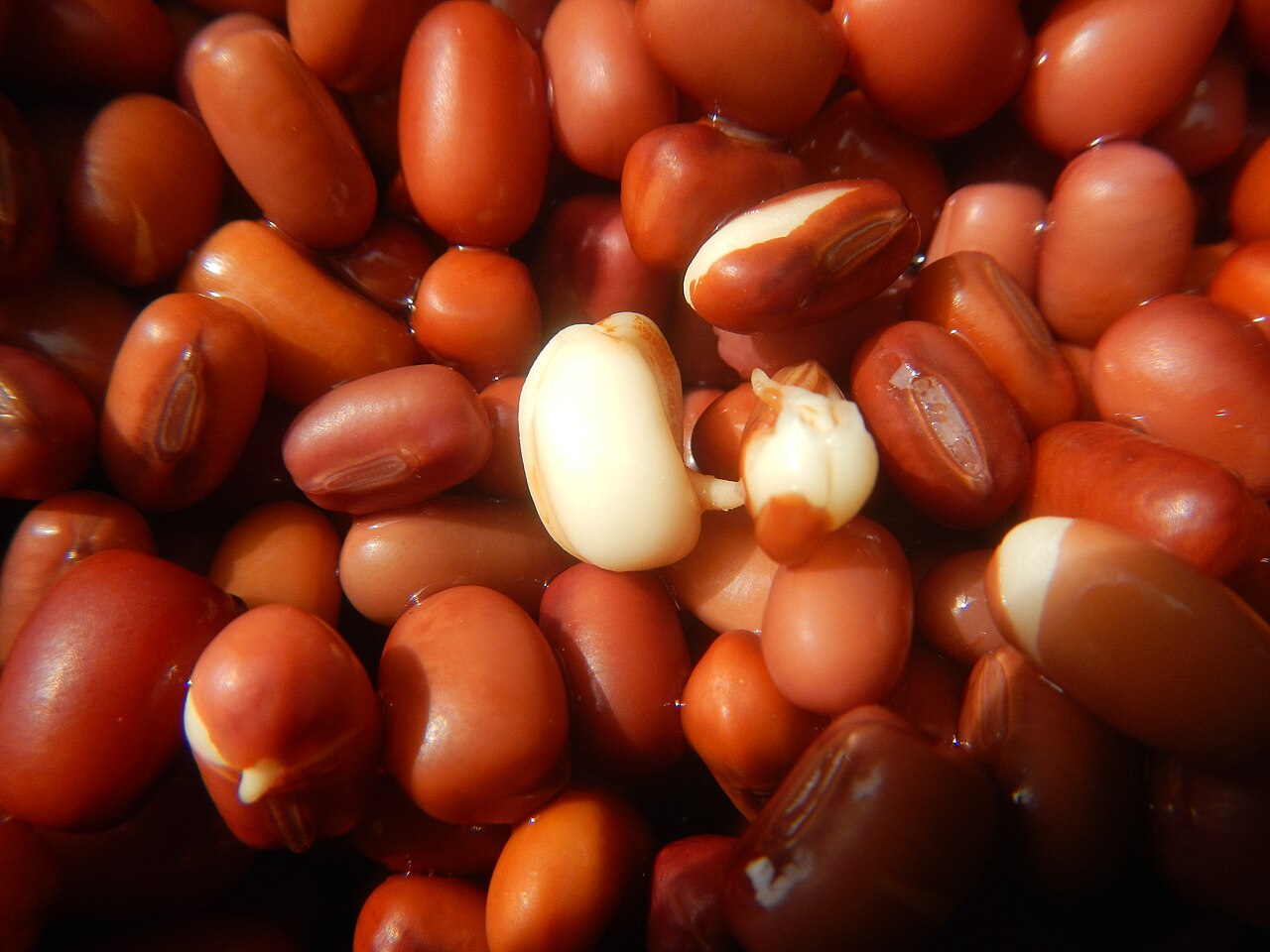
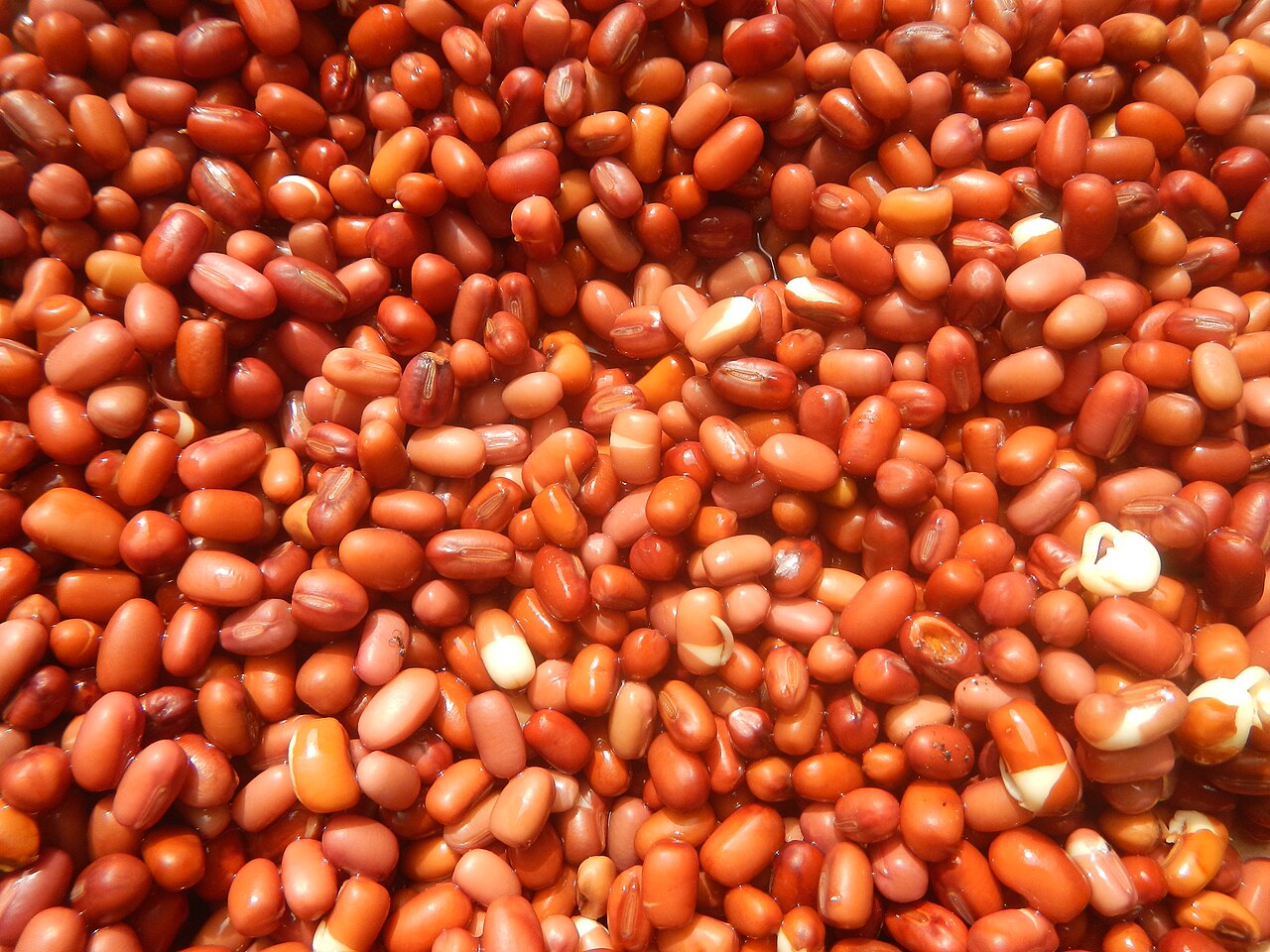
The adzuki bean (Vigna angularis) is an annual vine widely cultivated throughout East Asia for its small beans, typically about 5 mm long. It is known by many names, including azuki, aduki, red bean, or red mung bean, and is a key ingredient in East Asian cuisine, particularly for making red bean paste.
- scientific name
- Vigna angularis
- type
- Annual vine
- seed size
- Approximately 5 mm long
- common colors
- Red, white, black, gray, mottled
- major cultivation regions
- China, Japan, South Korea, Taiwan
- domestication period
- Estimated around 3000 BC, with evidence of cultivation in Japan c. 6000–4000 BP
Lore & Background
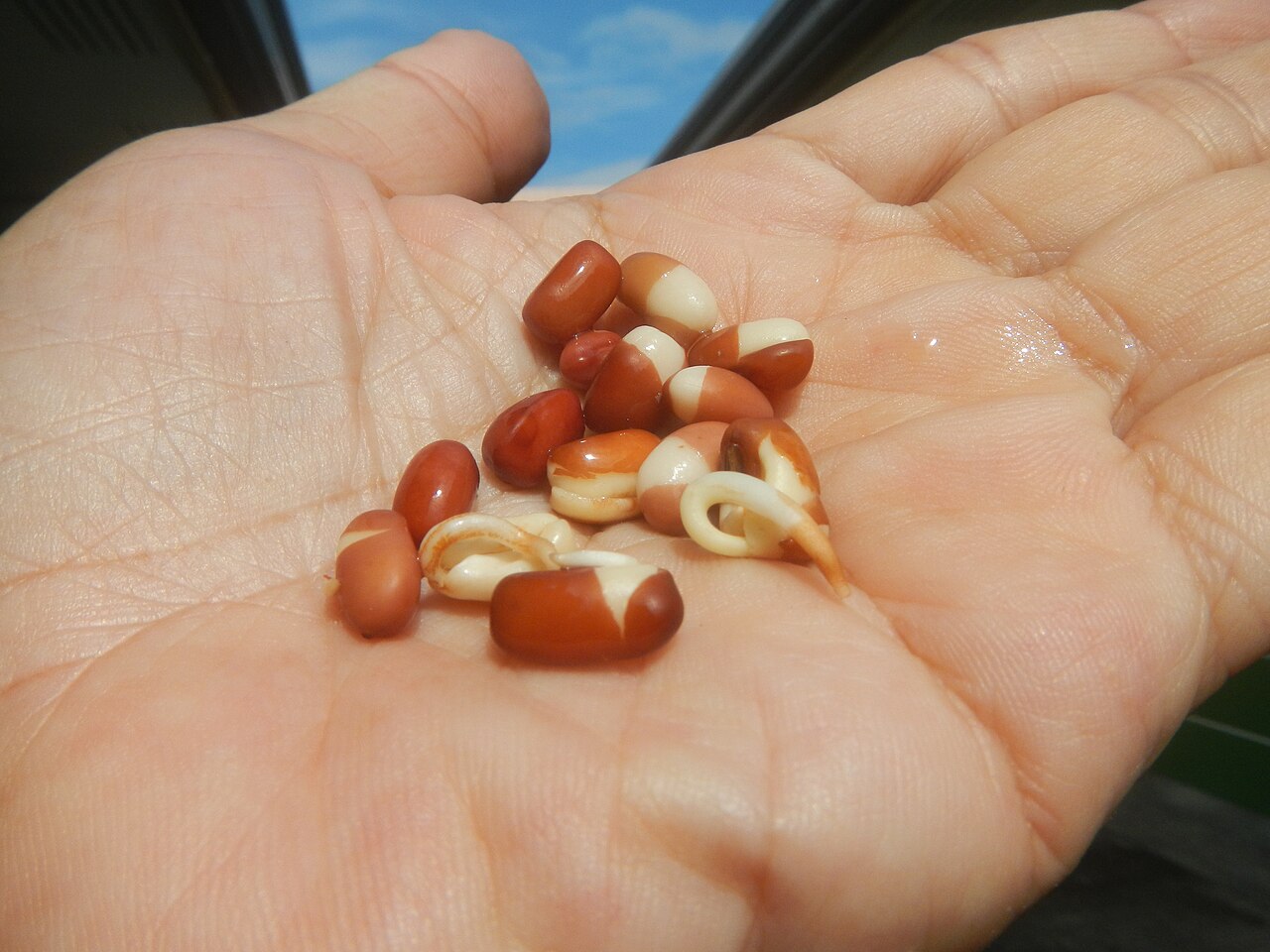
The adzuki bean is an annual, rarely biennial, bushy erect or twining herb, usually 30–90 cm high. Its leaves are trifoliate and pinnate, with ovate leaflets. The flowers are papilionaceous and bright yellow, arranged in axillary false racemes. Pods are smooth, cylindrical, and thin-walled, turning from green to white or grey as they mature, containing 2 to 14 seeds. The seeds are smooth and subcylindric, with a thousand kernel weight between 50 and 200 g. Seedling emergence is hypogeal and takes 7–20 days; the plant reaches maturity in 80–120 days. It primarily self-pollinates but cross-pollination also occurs.
Reader's Guide
The adzuki bean is a significant crop in East Asia, with China cultivating 670,000 hectares, Japan 60,000 hectares, South Korea 25,000 hectares, and Taiwan 15,000 hectares (2006 data). In Japan, it is the second most important legume after soybean, with annual consumption around 140,000 tonnes. Japan is the largest importer, sourcing from China, Korea, Colombia, Taiwan, the US, Thailand, and Canada. The wild ancestor is likely Vigna angularis var. nipponensis, with speciation occurring around 50,000 years ago. Domestication is estimated around 3000 BC, though early remains in Japan date to c. 6000–4000 BP. Genetic studies suggest a single origin in eastern Japan, with later spread and hybridization in China. Key domestication traits—loss of pod shattering and seed coat color change—originated in Japan and were selected by the Jōmon people from about 10,000 BP. More than 300 cultivars are registered in Japan, and large germplasm collections exist in China and Japan. Weed forms occur in Japan and are sometimes used as substitutes for cultivated beans.
Did You Know?
- The adzuki bean is also known as red bean, red mung bean, aduki bean, and azuki bean.
- The wild ancestor is probably Vigna angularis var. nipponensis, distributed across East Asia.
- In Japan, the adzuki bean was one of the first crops subjected to scientific plant breeding.
- The name 'adzuki' is a transliteration of the Japanese historical kana spelling アヅキ.
Culinary Preparation & Textural Grading
Adzuki bean paste is produced by boiling the beans and then mashing or grinding them into a cohesive mass. The finished product may be left unsweetened or sweetened with sugar, and its characteristic deep red hue derives from the thin husk surrounding each bean. Korean cooks sometimes work with the black variety and remove the husk before cooking, yielding a pale white paste. Alternatively, the husk can be separated by passing the cooked mash through a sieve before any sweetener is added, producing a red paste that is smoother and more uniform. The paste is classified along three axes: consistency, sweetness, and color. The mashed variety is prepared by boiling beans alongside sugar and crushing them, retaining visible fragments of broken beans and husk; whole unmashed beans may be folded back in for extra body. This is the most widely consumed form in Chinese confections and can be enjoyed standalone or in sweet soups. The smooth variety skips initial sugar, dilutes the mash into a slurry, strains out the husk, filters, and presses the residue dry through cheesecloth. Vegetable oil or lard is then worked in to enrich the mouthfeel, and the result is primarily reserved as a filling for Chinese pastries.
Linguistic Identity Across Three Cultures
Each East Asian language has developed its own layered vocabulary for this humble paste. In Japanese, the word an broadly covers any sweet, edible mashed paste, though red beans are the default assumption when no qualifier is attached. The more specific term azukian explicitly names the red-bean version. Other an varieties include shiroan, a white paste from navy or other white beans, and kurian, made from chestnuts. The name ogura, tied to Mount Ogura in western Kyoto, also appears in common usage. Chinese speakers use dòushā, literally bean paste, which defaults to the red-bean version; adding hóng before dòushā makes the red specification explicit. In Korean, the word pat for adzuki stands apart from kong, the general term for beans that typically refers to soybeans. The suffix so means filling, so patso literally translates as pat filling, with the unsweetened dark-red paste serving as the prototype. Prefixing dan (sweet) produces danpatso, the sweetened version often shortened to danpat. The term geopi, meaning hulled or peeled, gives geopipat for dehulled beans and geopipatso for the white paste they produce.
A Staple of East Asian Sweets
The paste threads through an extraordinary range of Chinese and Japanese desserts. In Chinese kitchens, it is stirred into hóng dòu tāng, a thick sweet soup often served alongside tangyuan and lotus seeds. It fills glutinous rice balls, sweet zongzi wrapped in bamboo leaves, and the thin pastry shell of mooncakes traditionally enjoyed at the Mid-Autumn Festival. Steamed bāozi, fried jiān dui pastries, red bean cakes, and pancakes all rely on it as a core ingredient. Japanese confectionery is equally dependent: anmitsu layers the paste with agar jelly cubes and fruit under a syrup; anpan and an-doughnuts enclose it in leavened dough. Daifuku wraps it in a small round rice cake, while dorayaki sandwiches it between two castella patties. Taiyaki molds it into a fish-shaped cake, and sakuramochi pairs it with pink mochi wrapped in a pickled cherry blossom leaf. Yōkan transforms the paste into a thick jellied dessert, and oshiruko, also called zenzai, serves it as a warm bean soup alongside rice cakes. Imagawayaki, manjū, and anko dango round out the list of pastries and dumplings that depend on this single filling.
Korean Distinctions & the White Paste Tradition
Korean culinary tradition treats adzuki beans as a distinct category rather than a subtype of the general bean family. The foundational preparation, patso, is a dark-red paste created by boiling and then mashing or grinding the beans, with the option of sifting out the skins for a smoother consistency. When honey or sugar is incorporated during the cooking process, the result is danpatso, commonly shortened to danpat. A uniquely Korean innovation is geopipatso, a white paste produced by boiling beans that have already been dehulled before cooking, then mashing or grinding them. This pale product contrasts sharply with the dark-red paste that dominates Chinese and Japanese traditions. Another Korean form, tongpat, uses whole beans as a filling without any mashing, preserving each bean's individual structure. The Korean system thus spans a wide spectrum, from whole-bean fillings to smooth white pastes, all derived from the same adzuki bean but distinguished by whether the husk is left intact, removed before cooking, or sifted out after the beans are mashed.
Gallery
Frequently Asked Questions
What is Adzuki bean?
Adzuki bean is a small annual climbing vine (Vigna angularis) native to East Asia, valued for its tiny seeds that measure roughly 5 mm in length. It is known by several regional names, including azuki, red bean, and red mung bean.
What colors do Adzuki bean seeds come in?
Although the deep-red variety is the most widely recognized, the plant actually produces seeds in red, white, black, gray, and mottled patterns. The red type is the one most associated with traditional East Asian cooking.
Where is Adzuki bean primarily grown?
The bean is cultivated extensively across China, Japan, South Korea, and Taiwan, making it a staple crop throughout the East Asian region. Its adaptability to these climates has kept it a dietary cornerstone for millennia.
How long has Adzuki bean been cultivated by humans?
Archaeological evidence points to domestication beginning around 3000 BC, with Japanese sites showing cultivation as far back as 6,000 to 4,000 years before present. This makes it one of the oldest continuously farmed legumes in the world.
What is Adzuki bean's main culinary role?
The bean serves as a foundational ingredient across East Asian cuisine, most notably as the base for red bean paste used in a wide variety of sweets and savory dishes. Its naturally sweet, earthy profile is what makes it so versatile in the kitchen.
More in Korean cuisine 1-24
Spotted an error? Know more?
This is a living reference — every entry is fact-audited, and reader corrections feed straight into our audit queue. Suggest an edit · See this site's audit record