Banchan
Small side dishes central to Korean meals.

Wikipedia / Wikimedia Commons
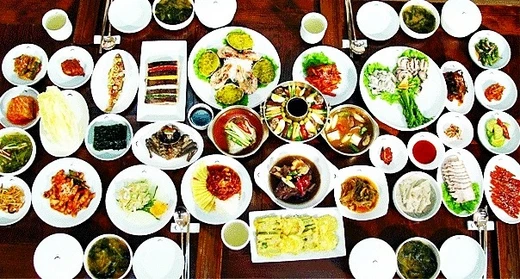
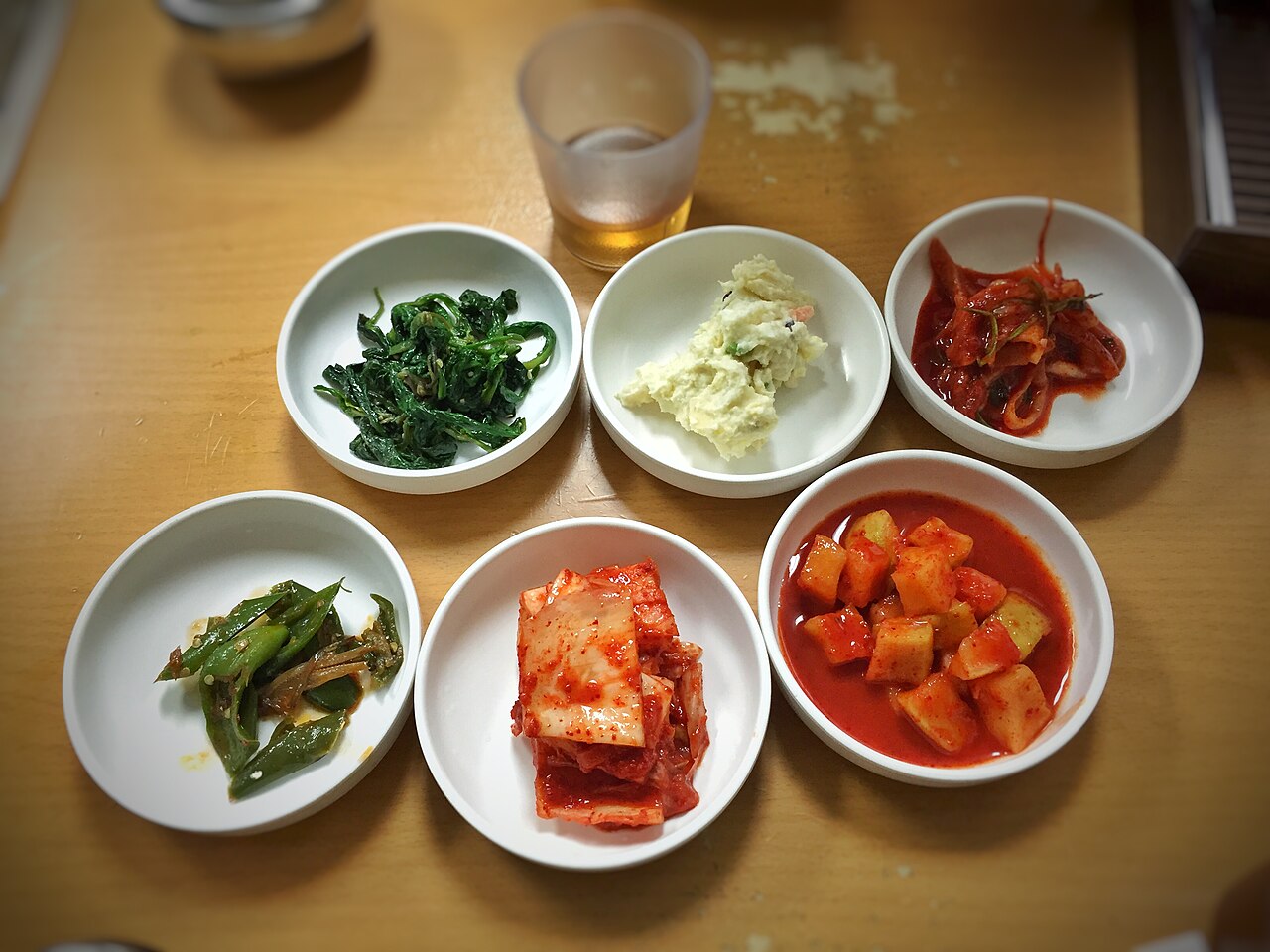
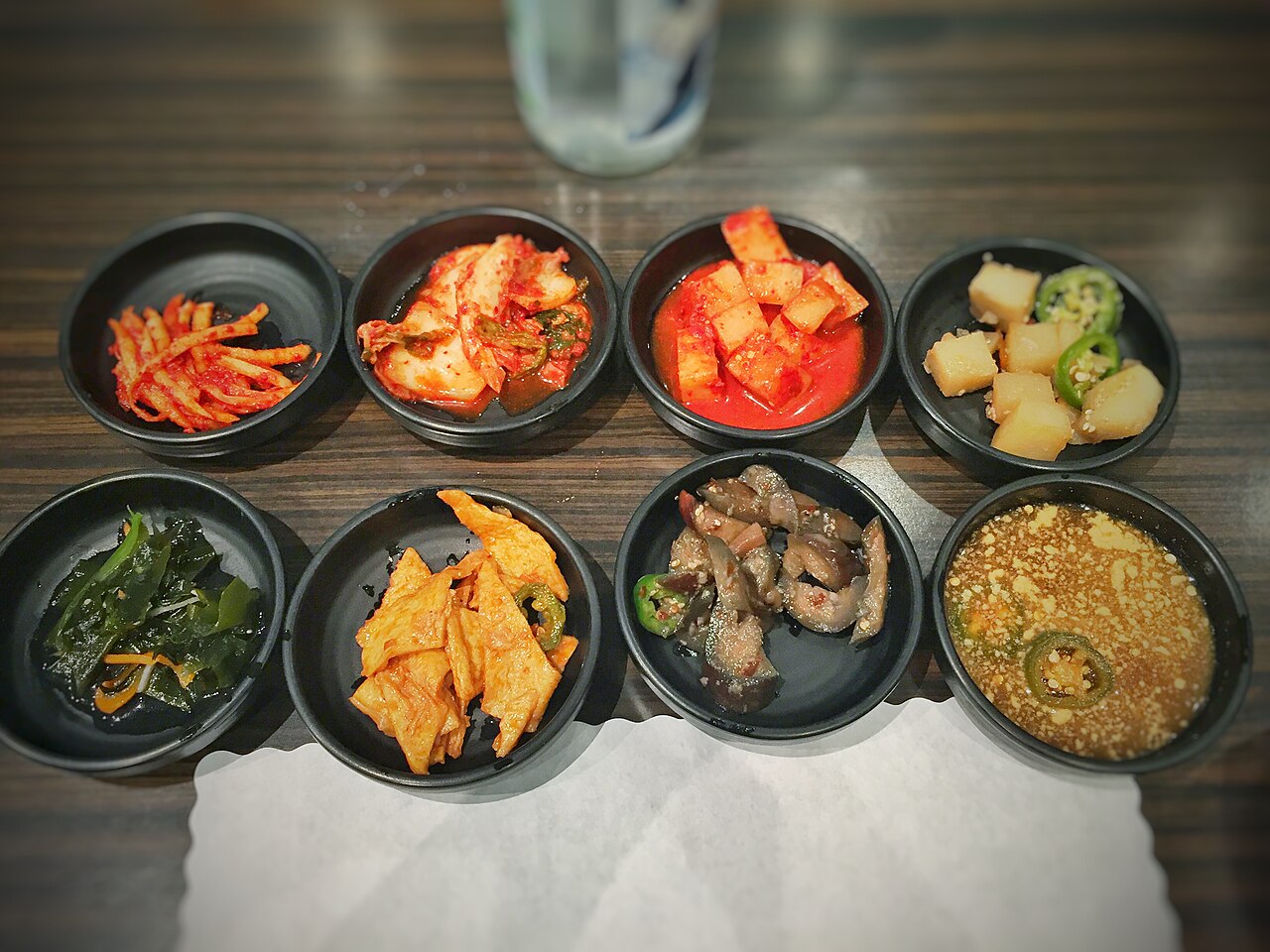
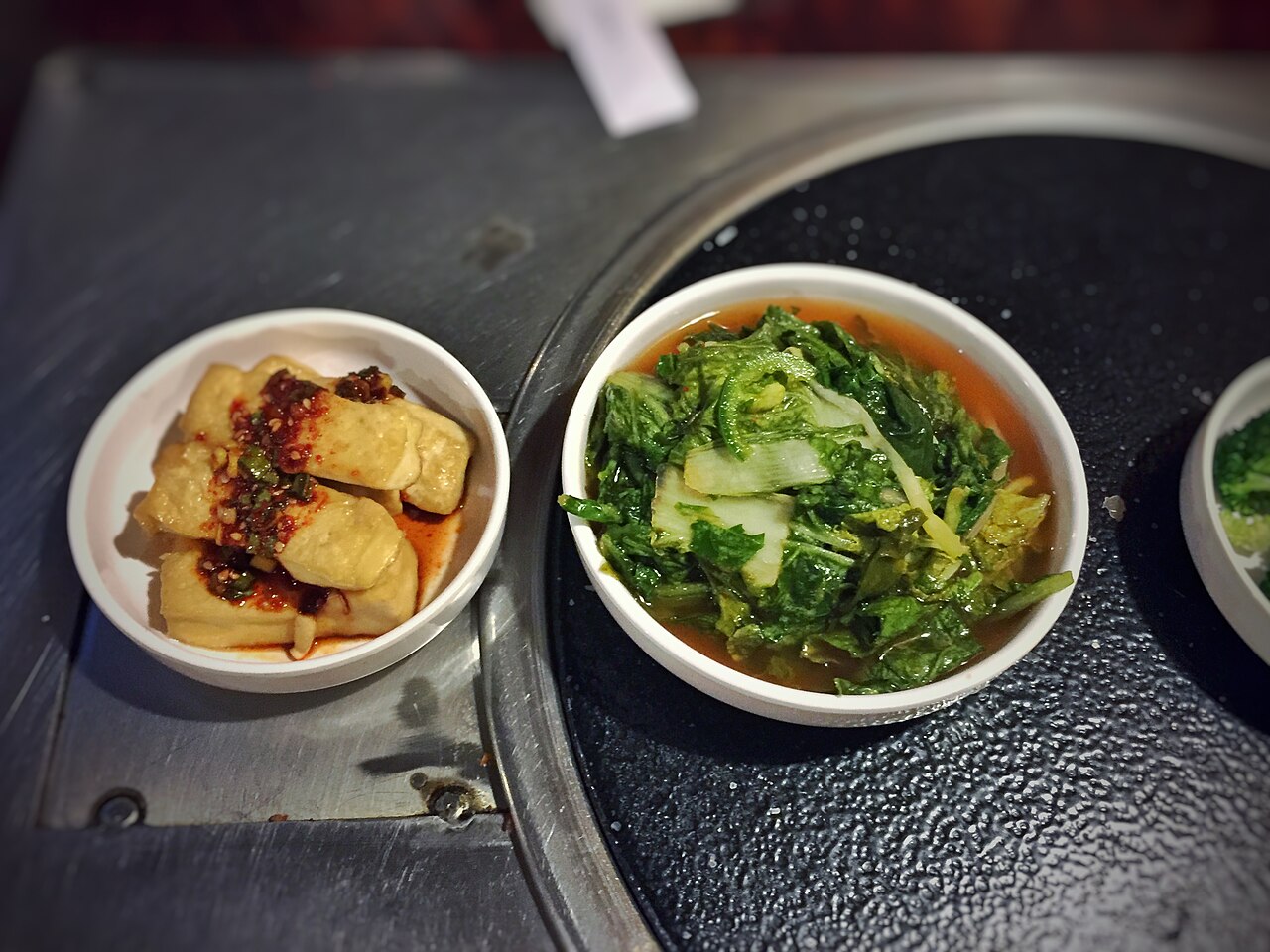
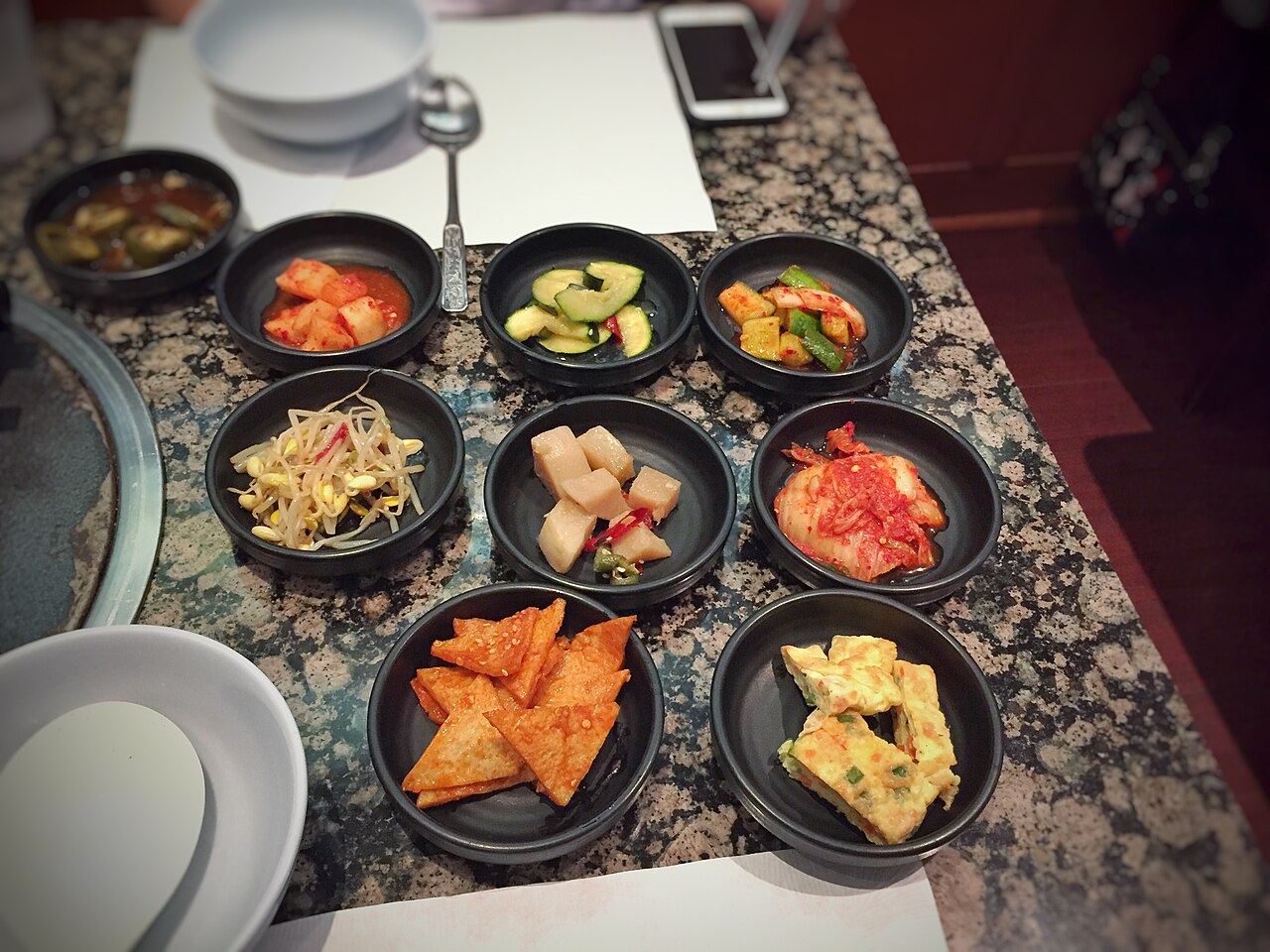
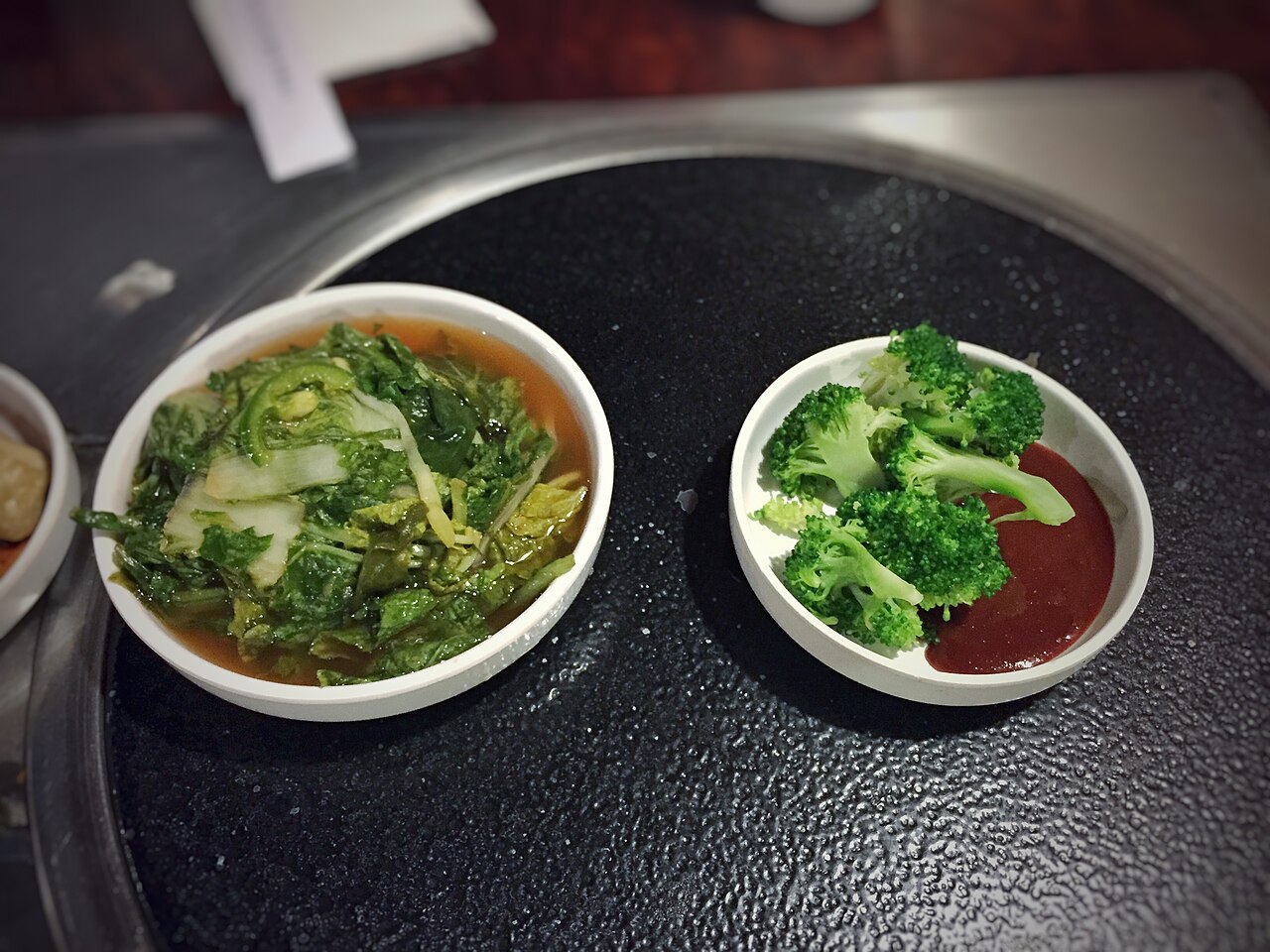
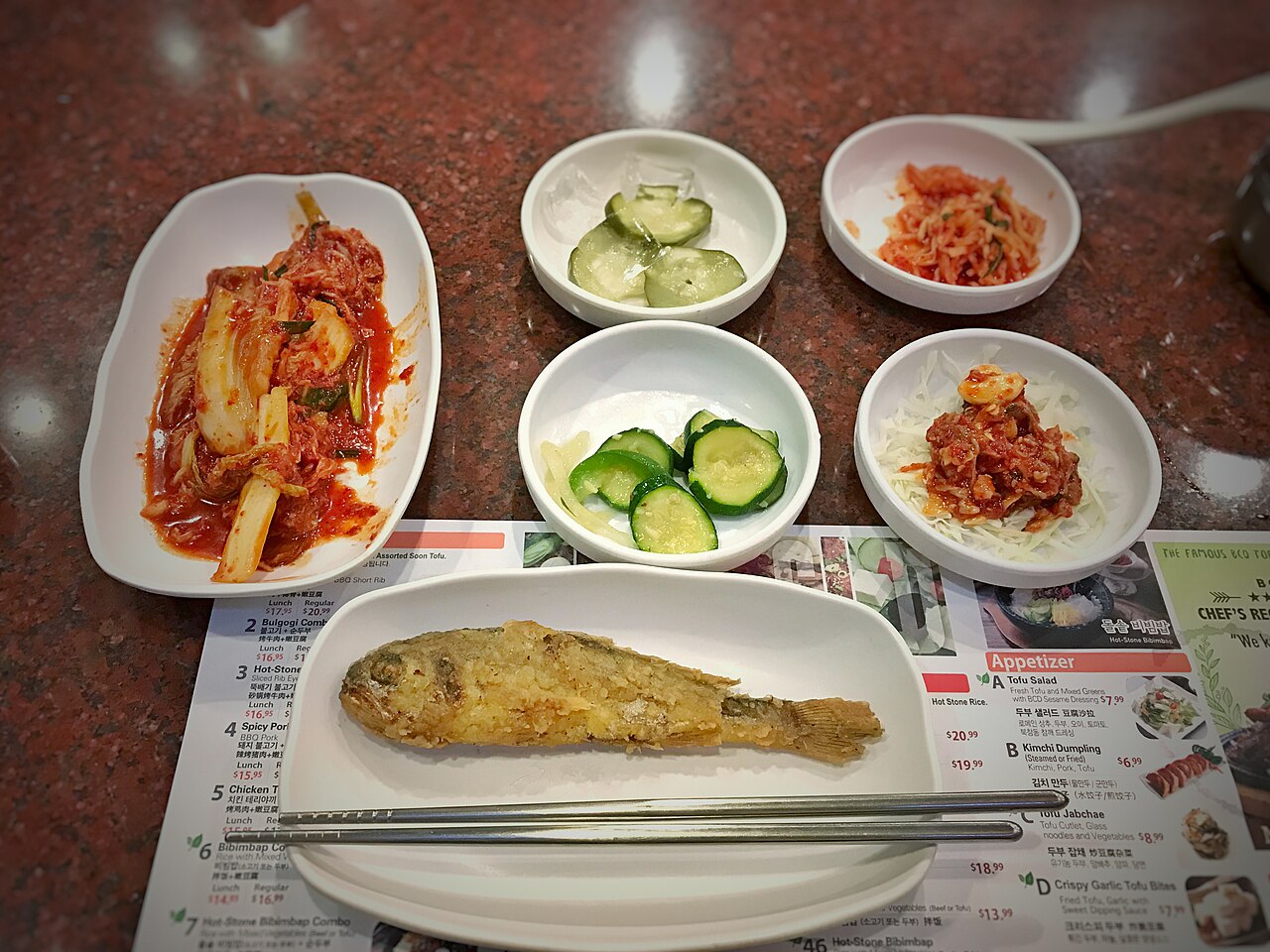
Banchan (BAHN-chahn; 반찬; 飯饌) are the small side dishes that accompany cooked rice in Korean meals. They’re typically placed in the center of the table for everyone to share, while individual bowls of rice and soup are set at each place. A main dish like galbi or bulgogi, plus a shared pot of jjigae, also sits at the center. Banchan come in small portions meant to be eaten up during the meal and refilled if they run out. The fancier the occasion, the more banchan appear; Jeolla Province is especially known for serving a wide variety in one meal.
A basic table setting, called bansang, includes cooked rice, soup, gochujang or ganjang, jjigae, and kimchi. The number of banchan determines the setting’s name—3 cheop, 5 cheop, 7 cheop, 9 cheop, or 12 cheop bansang—with 12 cheop reserved for Korean royal cuisine. Kimchi isn’t counted in the cheop total. In the past, the number of banchan reflected social rank: a king would get 12, while others received fewer.
Banchan as a distinct side-dish tradition is most commonly associated with the Joseon Dynasty, when the practice of serving multiple small dishes alongside rice became formalized. While Buddhist-influenced plant-based diets contributed to Korean cuisine earlier, the specific development of banchan—especially the elaborate table settings with varying numbers of dishes—took shape during the Joseon period. Royal kitchens developed elaborate ways to prepare and present these dishes, while commoners made simpler, smaller versions. The tradition of vegetable-based banchan became deeply rooted in Korean cuisine over centuries.
During the Joseon Dynasty, Confucianism replaced Buddhism as the dominant ideology, and tea fell out of favor in the palace. But snacks like rice cakes endured. Royal cuisine during this period was shaped by Confucian restraint, though after the 18th century, personal taste grew more important. Still, formalities remained key. The Kobaeumsik, a layered religious food symbolizing the king’s power, reflects Confucian aesthetics. Royal cooks also followed the philosophy of Yaksikdongwon, aiming for balanced, healthful meals that harmonized yin and yang. Later, the Korean Empire adopted foreign influences—western-style banquets were held at Deoksugung Palace, and King Kojong reportedly enjoyed coffee. When Emperor Sunjong took the throne, royal chefs and cooks introduced royal cuisine to the publ
- field
- Korean cuisine
- nationality
- Korean
- known_for
- Small side dishes served with rice, central to Korean table setting (bansang)
Lore & Background
Banchan as a distinct side-dish tradition is most commonly associated with the Joseon Dynasty, when the practice of serving multiple small dishes alongside rice became formalized. While Buddhist-influenced plant-based diets contributed to Korean cuisine earlier, the specific development of banchan—especially the elaborate table settings with varying numbers of dishes—took shape during the Joseon period. Court kitchens developed various methods for cooking and presenting these dishes, while commoners produced smaller, simpler arrays. Over centuries, this vegetable-based tradition became deeply ingrained in Korean food culture.
During the Joseon Dynasty, Confucianism became dominant, and royal cuisine placed enormous weight on the philosophy of Yaksikdongwon—the health purpose of food—aiming for nutritionally balanced meals that achieved synergy between Yin and Yang. The Korean Empire was also influenced by foreign cuisine, with western-style banquets held at Deoksugung Palace. In the old
Reader's Guide
Banchan holds a central place in Korean cuisine, representing both a culinary tradition and a social marker. The number of banchan served—ranging from 3 cheop to 12 cheop—historically indicated the diner's social class, with kings receiving 12 and others fewer. This practice reflects the Confucian emphasis on hierarchy and formality that shaped Joseon-era dining. The development of banchan was profoundly influenced by Buddhist dietary restrictions that elevated vegetable-based dishes, and later by the need for food preservation through fermentation in a mountainous peninsula with extreme seasons. This fermentation tradition produced health benefits now studied by modern food scientists. Varieties of banchan are extensive, including kimchi (fermented vegetables), namul (seasoned steamed or stir-fried vegetables), bokkeum (stir-fried dishes), jorim (simmered dishes), jjim (steamed dishes), and jeon (pan-fried pancakes). Gochujang, a fermented chili paste, is a chief seasoning and fermentation agent for many banchan, and its quality was historically considered so vital that a 15th-century book stated it decided the farming success of that year. Banchan thus embodies centuries of Korean agricultural, religious, and social history, remaining an essential component of everyday meals and ceremonial feasts alike.
Did You Know?
- Banchan is thought to have originated from Buddhist influence around the mid-Three Kingdoms period, following a proscription against eating meat.
- The number of banchan served historically distinguished social class: a king would have 12, while others usually had fewer.
- Gochujang, a chief seasoning for many banchan, was so vital that a 15th-century book stated its quality decided the farming success of that year.
- Kimchi is not included in the cheop count when naming table settings like 3 cheop or 12 cheop bansang.
The Architecture of the Korean Table
Banchan occupy a central, communal position on the Korean dining table, placed in the middle for all diners to share. Around them sits the secondary main course—perhaps galbi or bulgogi—and a shared pot of jjigae, while each person receives their own bowl of rice and guk. The portions are deliberately small, designed to be consumed within a single sitting and refilled as needed. The number of side dishes signals the formality of the occasion: a basic bansang includes rice, soup, a fermented paste, jjigae, and kimchi, but additional banchan elevate the setting into 3-cheop, 5-cheop, 7-cheop, 9-cheop, or even 12-cheop configurations. Kimchi, notably, is excluded from this count. The 12-cheop arrangement was reserved for the highest ranks of the royal household, while lesser nobles capped out at nine. Jeolla Province earned a particular reputation for presenting an extraordinary variety of banchan in a single meal, making the table a visual celebration of small, shared plates.
Roots in Faith and Restriction
The origins of banchan trace back to the mid-Three Kingdoms period, when Buddhist influence led Korean monarchies to prohibit meat in their diets. With meat-based dishes off the table, vegetable preparations surged in prominence and became the defining element of Korean cooking. Court kitchens devoted themselves to refining methods of preparing, cooking, and presenting these plant-based dishes, while ordinary households managed with smaller, simpler arrays. Although the Mongol invasions eventually lifted the meat ban and restored animal offerings for rituals like jesa, roughly six centuries of vegetable-centered cuisine had already left a permanent mark on the culinary tradition. During the Joseon Dynasty, Confucianism replaced Buddhism as the guiding ideology, and while tea service faded from the palace, the broader culture of restrained, formal dining persisted. Royal cooking in this era reflected a Confucian aesthetic of moderation, even as personal taste gradually gained influence from the eighteenth century onward.
Fermentation as Survival and Flavor
Korea's mountainous geography and extreme seasonal temperatures made food preservation a matter of necessity, and fermentation became the primary answer. With cooking oil scarce compared to neighboring China—where frying and pickling dominated—Korean cooks turned to fermenting grains, vegetables, beans, and fish to lock in nutrients through harsh winters and sweltering summers. Gochujang emerged as a cornerstone seasoning and fermentation agent, so essential that the fifteenth-century text Hurbaekjeongjip, written by Gwidal Hong, declared the quality of a household's gochujang a predictor of that year's farming success. Other fermented pastes, jang, served dual roles as flavor enhancers and dipping sauces; chojang, for instance, combined gochujang with honey, vinegar, and ground pine nuts, while mustard added its own pungent depth. Jangkwa—pickled seasonal vegetables treated with kanjang, gochujang, or doenjang—rounded out the table. Modern food scientists continue to study the unexpected health benefits these ancient fermentation processes produce.
Royal Philosophy and the Language of Hierarchy
Korean royal cuisine was governed by the principle of Yaksikdongwon—the belief that food must serve a health purpose—aiming for nutritional balance and a harmony between Yin and Yang. The Kobaeumsik, a layered ceremonial dish, exemplified the Confucian aesthetic of formality and symbolism, said to represent the king's power. The number of banchan on a table was not merely a matter of abundance but a strict marker of rank: the monarch received twelve, while other members of the royal family were limited to nine or fewer. This hierarchical logic extended to every aspect of the meal, from the arrangement of dishes to the formality of presentation. As the Korean Empire opened to foreign influence, western-style banquets appeared at Deoksugung Palace, and King Kojong was noted for his fondness of coffee. Under Emperor Sunjong, royal chefs and cooks began transmitting palace recipes to the common people, gradually dissolving the once-absolute boundary between court and household tables.
Gallery
Frequently Asked Questions
Who is Banchan?
Banchan refers to the small shared side dishes that sit at the center of a Korean meal alongside individual bowls of rice and soup. The term (반찬) essentially means 'half-dishes' or accompaniments meant to round out each bite of rice.
What are Banchan's powers/role?
Banchan's job is to add layers of texture, flavor, and nutrition to the main proteins and stews on the table, making every spoonful of rice more interesting. They are served in modest portions designed to be finished during the meal and refilled as they run low.
How does Banchan's story end?
There is no fixed 'finale'; the dishes are simply eaten over the course of the meal and topped up whenever they run out. The table continues to be replenished until everyone at the gathering is satisfied.
Why is Banchan important?
Banchan is the defining element of the Korean table setting known as bansang, structuring how a meal is shared communally. The number and variety of banchan on display often signals how formal or celebratory the occasion is.
Where is Banchan strongest?
Jeolla Province is especially celebrated for laying out an exceptionally wide spread of banchan in a single sitting. The more elaborate the gathering, the greater the array of small dishes that appears at the center of the table.
More in Korean cuisine 1-24
Spotted an error? Know more?
This is a living reference — every entry is fact-audited, and reader corrections feed straight into our audit queue. Suggest an edit · See this site's audit record