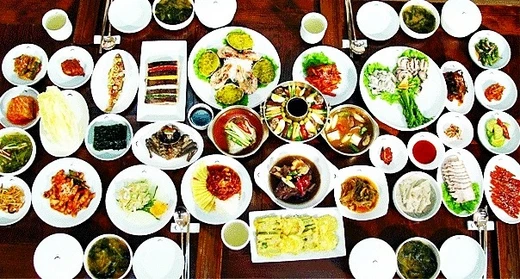
History of Korean cuisine
Korean cuisine evolved through dynastic trade, Confucian court traditions, and regional diversity.

Wikipedia / Wikimedia Commons
The history of Korean cuisine spans from the Three Kingdoms period (1st century B.C.–7th century A.D.) through the Goryeo (918–1392) and Joseon (1392–1910) dynasties. During the Three Kingdoms period, the kingdoms of Goguryeo, Baekje, and Silla diversified Korean food by spreading new ingredients and recipes through intercultural exchanges, with each kingdom growing its own crops based on geography but sharing them via trade networks. The Joseon Dynasty was marked by strong Confucian influence on food, including the development of court cuisine prepared by selected chefs using local specialties and seasonal foods.
- known_for
- Development of royal court cuisine and diverse regional dishes
Lore & Background
During the Three Kingdoms period (1st century B.C.–7th century A.D.), the three major kingdoms—Goguryeo, Baekje, and Silla—diversified Korean food by spreading new ingredients and recipes through intercultural exchanges. Each kingdom had its own crops based on geographical location, but a trade network allowed them to share crops with one another.
Reader's Guide
The history of Korean cuisine is significant for its evolution across major dynasties, reflecting cultural and social changes. The Three Kingdoms period established a foundation of regional diversity and trade, while the Goryeo Dynasty introduced the concept of grilling meat at the table, including the popular dish bulgogi. The Joseon Dynasty brought Confucian influence, which still affects Korean cuisine today, and developed a sophisticated court food tradition. Court food was prepared by selected chefs using local specialties and fresh seasonal foods from across the country, and it was preserved through written records like the 'Wonhaeng Eulmyo Jeongri Uigwe' (1795) and oral traditions of court chefs and royal descendants. The royal family held five meals daily, including porridge, breakfast, a light afternoon meal, dinner, and a night meal, served on a surasang table with rice, soup, stews, hot pots, kimchi, and soy sauce. This legacy continues to influence modern Korean dining.
Did You Know?
- Tabletop barbecue as a widespread practice is not documented for the Goryeo period.
- Bulgogi in its recognizable form was not popular during the Goryeo Dynasty.
- During the Joseon Dynasty, the royal family typically had four meals a day.
- The 'Wonhaeng Eulmyo Jeongri Uigwe' (1795) is a record of a specific royal procession and banquet, not a general reference on Joseon court food.
The Bureaucratic Machinery Behind the Royal Table
Korean royal court cuisine was never the work of a single chef but rather the output of an elaborate governmental apparatus. During the Joseon Dynasty (1392–1897), the Six Ministries housed dedicated positions overseeing every aspect of food procurement and consumption for the palace. The Board of Personnel managed rice acquisition for the royal family, while the Board of Rites handled ancestor-rite foods, wine, beverages, and medicinal preparations. Beyond these official posts, hundreds of palace servants—predominantly women from commoner or low-status families—performed the actual cooking. They were organized into specialized bureaus, such as the Bureau of Special Foods (Saenggwa-bang) and the Bureau of Cooking Foods (Soju-bang), each with distinct responsibilities. Their tasks ranged from producing tofu and liquor to crafting tea and tteok (rice cakes). Male cooks from outside the palace could be called in to assist during larger banquets, but the day-to-day culinary labor of the court rested squarely on the shoulders of these women, making the royal kitchen a uniquely female-dominated institution within a highly stratified society.
A Day at the Royal Table: Five Meals and the Ritual of Sura
The Joseon royal household observed a five-meal daily pattern, a practice with roots stretching back to antiquity. Three of these were full-course meals, while the afternoon and post-dinner servings were lighter. The day opened with mieumsang, a sunrise porridge of rice cooked with abalone, mushrooms, pine nuts, or sesame, accompanied by kimchi, oysters, and soy sauce—believed to restore the king and queen's vitality. The true centerpiece of the day was the sura, served at ten in the morning and again between six and seven in the evening. Each surasang comprised two kinds of rice, two soups, two stews, a meat stew, a jeongol casserole, three kimchi varieties, three jang condiments, and twelve side dishes known as 12 cheop. Meals were taken in the surakan, a dedicated dining room where the king sat to the east and the queen to the west, each with their own set of tables. Three palace servant women, the sura sanggung, attended the royals, lifting bowl covers and presenting each dish only after confirming it was free of poison.
A Showcase of the Peninsula: Regional Sourcing and Courtly Opulence
Royal court cuisine functioned as a living catalogue of Korea's diverse regions. The eight provinces took turns each month presenting their finest ingredients to the palace, delivered by their respective governors, giving the kitchen a constantly rotating pantry of local delicacies. This system meant that royal meals were not tied to a single season the way a commoner's diet might be; instead, the menu shifted dramatically from one day to the next, drawing on whatever the provinces had sent that month. The tradition of using the palace as a culinary showcase stretches well before the Joseon era. In the Silla kingdom, rulers commissioned Anapji Lake in Gyeongju, complete with multiple pavilions and halls designed exclusively for lavish banquets, and built the spring-fed channel Poseokjeong so that wine cups could drift past poets composing verses. The court's appetite for opulence was thus not merely about sustenance but about demonstrating the breadth and wealth of the entire peninsula, borrowing freely from the regional and bordering culinary traditions that surrounded it.
Preservation, Revival, and the Architecture of the Surasang
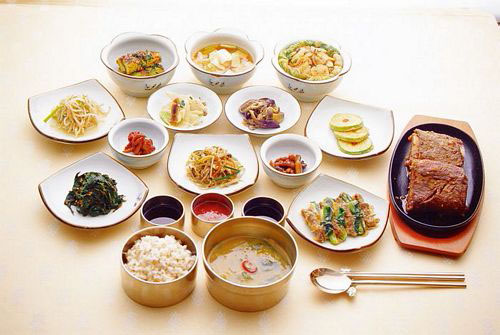
The culinary heritage of the Joseon court has not been left to fade into memory. The Korean government has inscribed it as Important Intangible Cultural Property No. 38, and Han Bok-ryeo serves as its current Living National Treasure, the designated keeper of this tradition. A 21st-century revival of the cookery style has brought renewed public attention to practices that were once confined to palace walls. The physical architecture of a surasang setting remains highly codified: three tables and a charcoal-heated hotpot arranged in a precise configuration. The largest round table holds the main bowl, soups, stews, and side dishes; a smaller round table at the lower right carries red sura, gomtang, dessert, tea, and empty vessels; a rectangular table at the upper right stores eggs, sesame oil, raw vegetables, and sauces. The hotpot typically holds a jeongol such as sinseollo. Dishes are traditionally served in bangjja, bronzeware, and the full spread is expected to number twelve items alongside rice and soup—a standard that has endured from the Joseon court into modern ceremonial practice.
Gallery

Frequently Asked Questions
What does the History of Korean cuisine actually cover?
It traces how Korean food developed from the Three Kingdoms era (1st c. B.C.–7th c. A.D.) through the Goryeo and Joseon dynasties, showing how trade, court traditions, and regional differences shaped the dishes we know today.
How did the Three Kingdoms period influence Korean food?
Goguryeo, Baekje, and Silla each grew crops suited to their own geography, then swapped ingredients and recipes through trade networks, which diversified what Koreans ate long before any unified dynasty existed.
What role did Confucianism play in shaping Korean cuisine?
During the Joseon Dynasty (1392–1910), Confucian values led to a formalized court cuisine prepared by carefully selected chefs who highlighted local specialties, embedding ritual and hierarchy into how food was made and served.
Why is the Joseon Dynasty considered a turning point for Korean food?
It is where royal court cuisine was codified and regional dishes were further distinguished, laying the structural and philosophical groundwork that still defines Korean cooking traditions today.
What is Korean cuisine history most known for?
Fans point to two big threads: the refinement of royal court cuisine under Confucian influence and the rich diversity of regional dishes that emerged from centuries of dynastic trade and local agriculture.
More in Korean cuisine 1-24
Spotted an error? Know more?
This is a living reference — every entry is fact-audited, and reader corrections feed straight into our audit queue. Suggest an edit · See this site's audit record