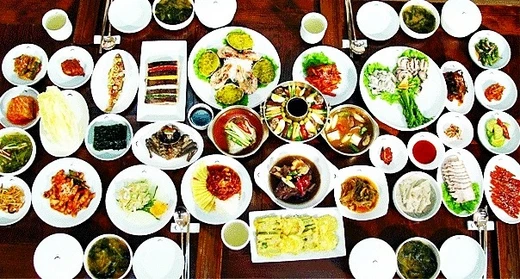
Black garlic
Aged garlic darkened by Maillard reaction, with savory-sweet flavor.

Wikipedia / Wikimedia Commons
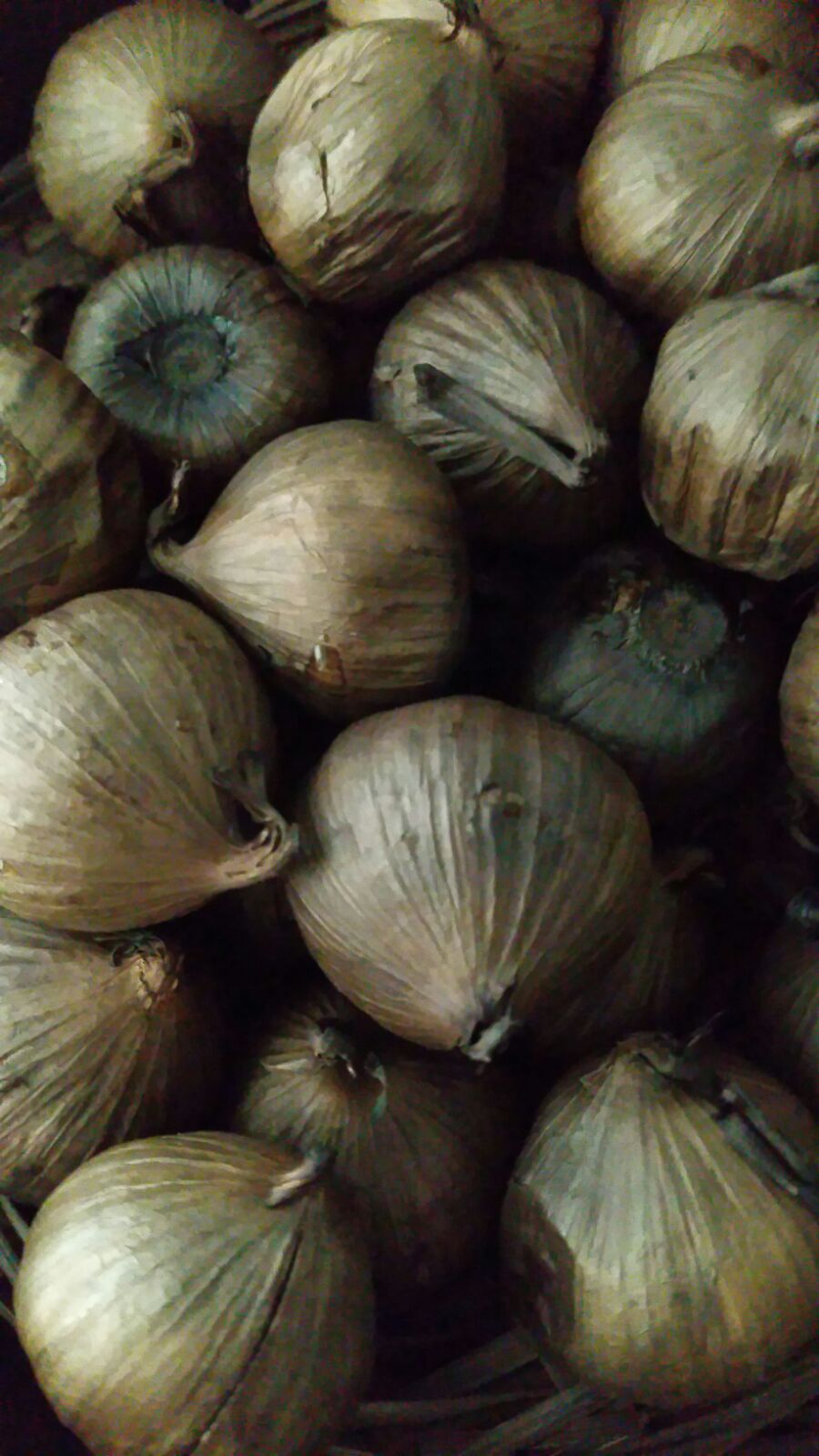
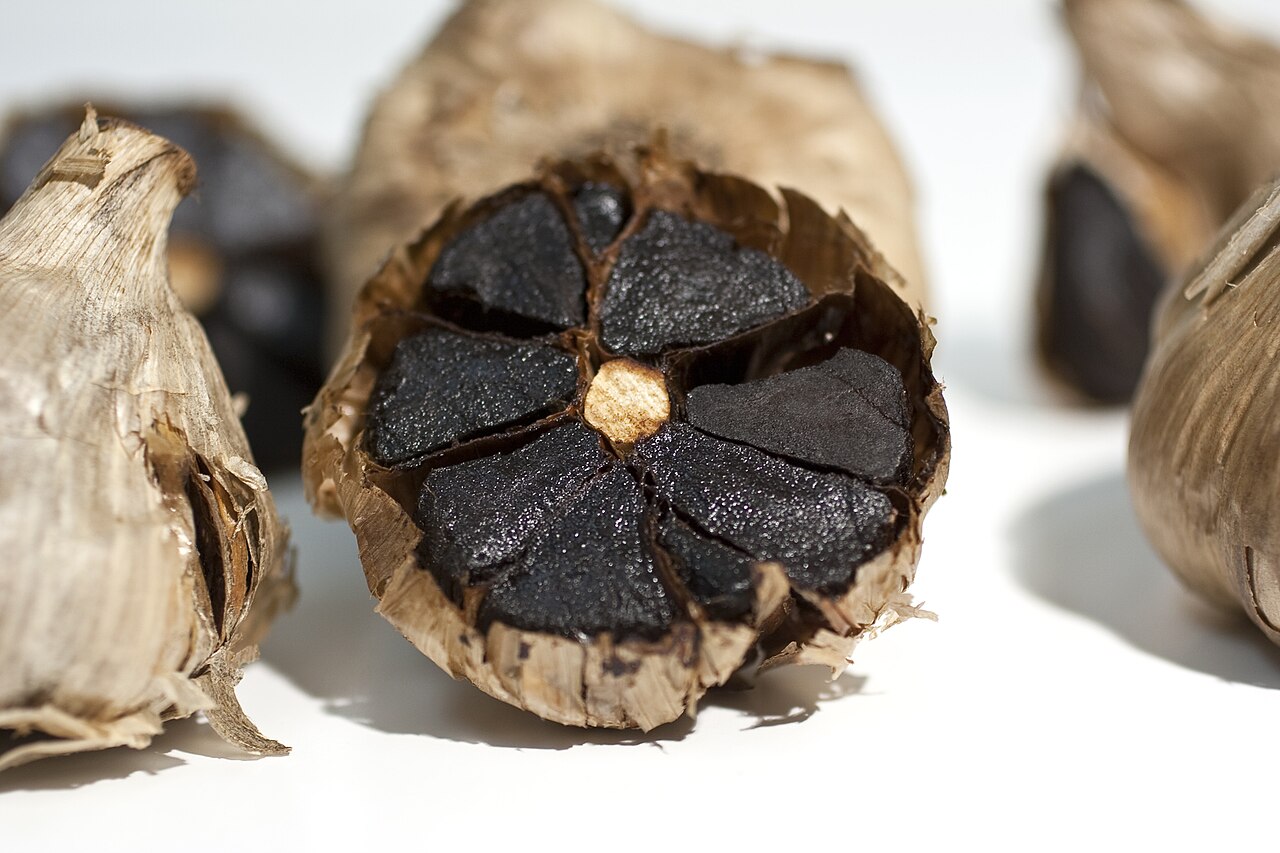
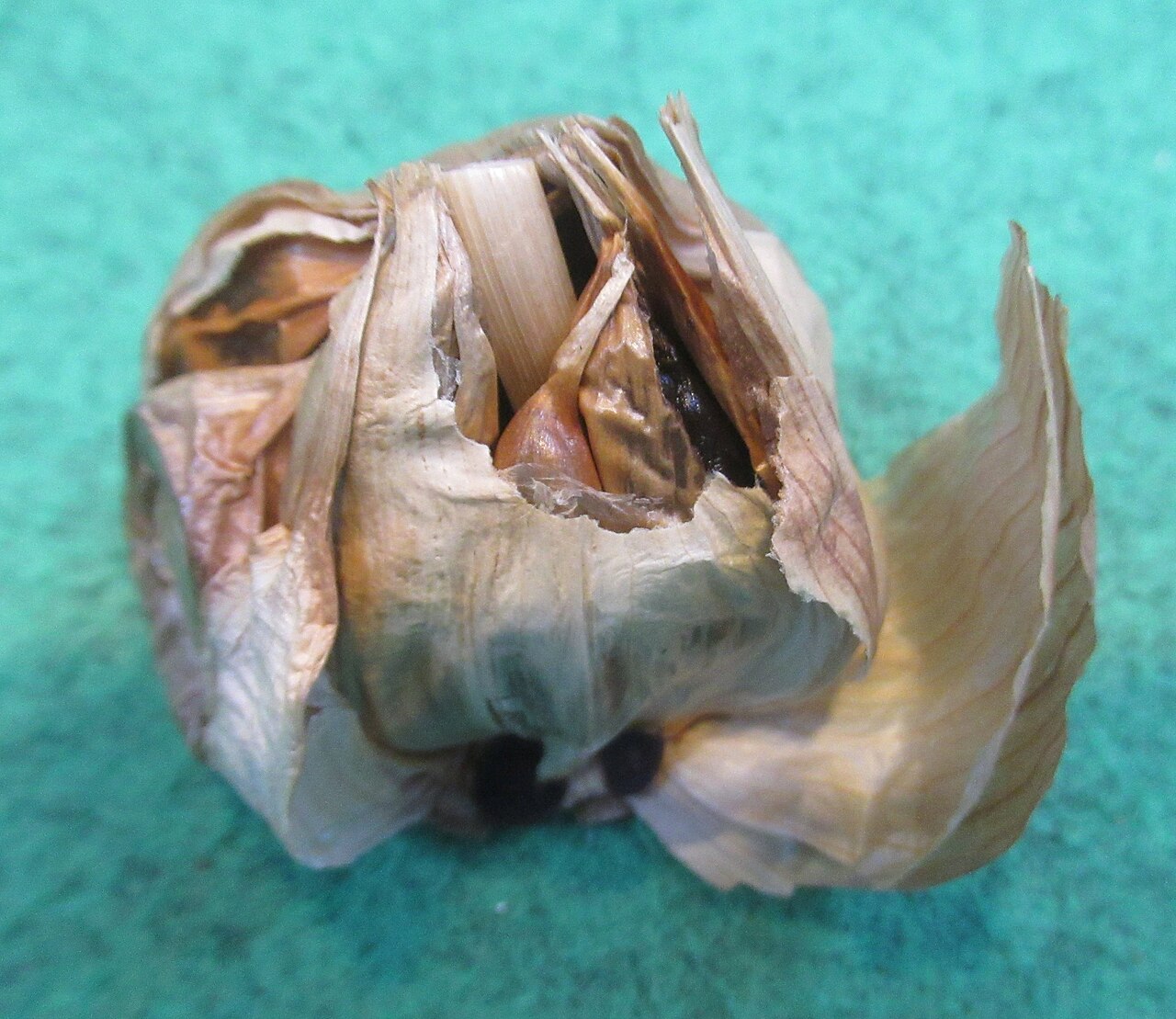
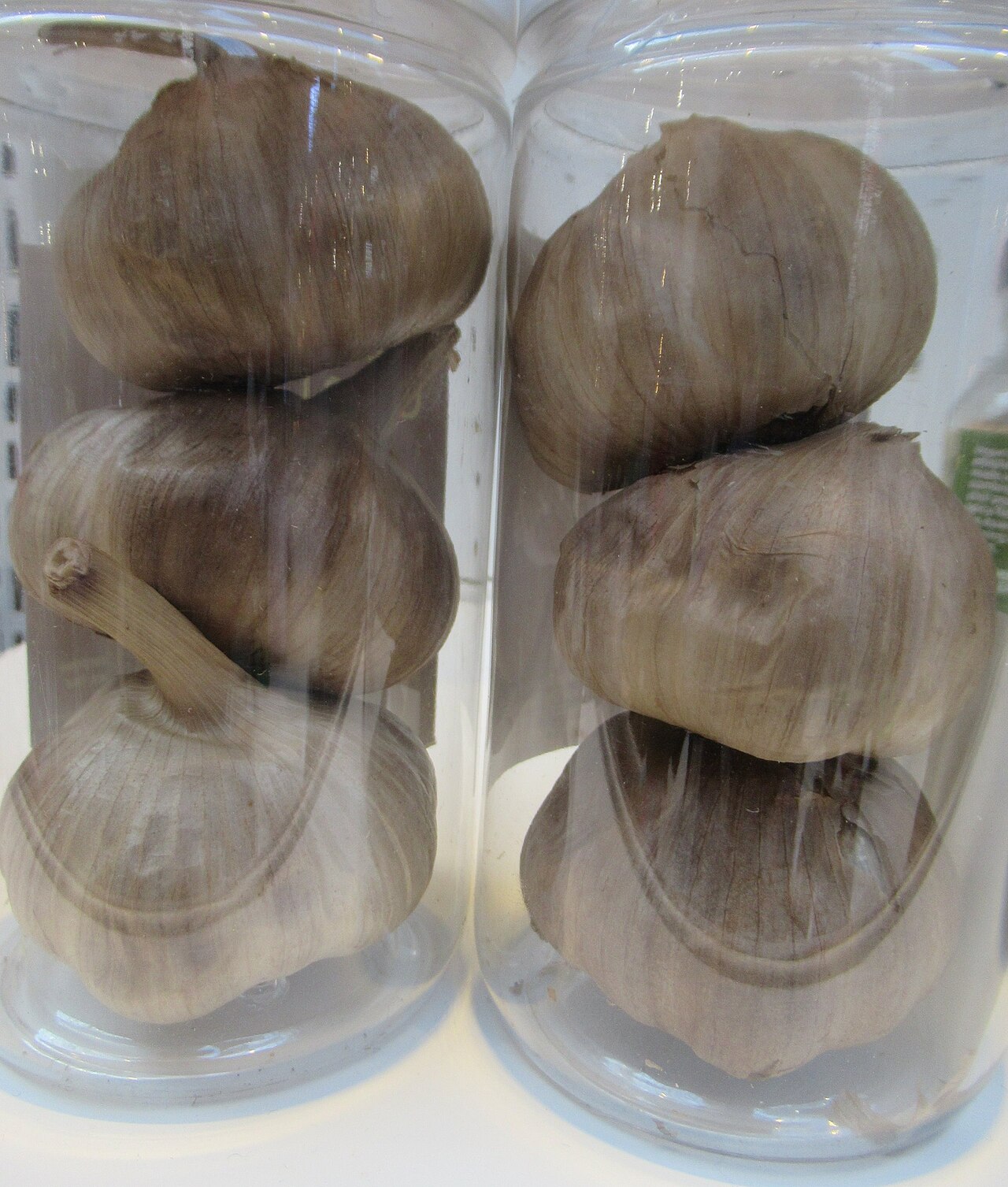
Black garlic is aged garlic that turns a deep brownish-black. Its origins are in East Asia. The garlic (Allium sativum) is kept in a warm, humid, controlled setting for several weeks, triggering a Maillard reaction. This process gives the cloves a savory taste that is quite different from regular, unfermented garlic.
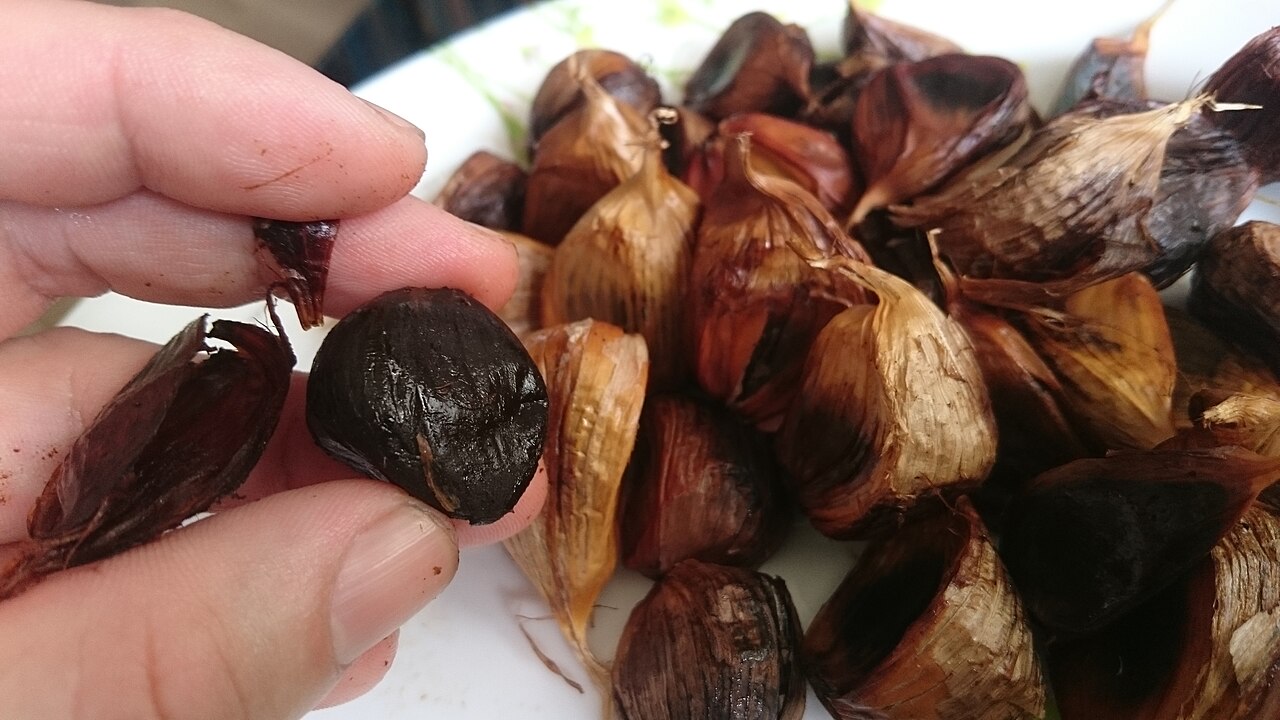
To produce it, whole heads or separated cloves are aged in a controlled environment with 80 to 90% humidity and temperatures between 60 and 90 °C (140–190 °F) for 15 to 90 days—often at 85% humidity and 70 °C for 40 days. No additives or preservatives are used, and the garlic is not burned. The dark color comes from a long, low-temperature Maillard reaction. The cloves turn black and develop a sticky, date-like texture. During this process, the garlic’s sulfurous enzymes and amino acids convert into sugars, reducing the typical pungent garlic aroma and flavor while creating new characteristics. Heat-resistant bacterial endophytes that can ferment have been found in both common and black garlic, which may play a role in production. Black garlic is not the same as black garlic oil (māyu), which is unfermented garlic cooked in oil on a stove. It is rich in polyphenols, especially hydroxycinnamic acid derivatives, which likely contribute to its aroma and flavor.
The sharp pungency of fresh garlic softens or disappears almost entirely in black garlic, giving way to notes of licorice, tamarind, and molasses. Its flavor depends on the fresh garlic used: higher sugar content yields a milder, more caramel-like taste, while lower sugar content produces a sharper, more acidic flavor. Burnt flavors can occur if the garlic is heated too long at too high a temperature, or not long enough—since the cloves turn black before the full sweetness develops.
Black garlic became more popular in the early 21st century. It is used in savory sauces for fish, risotto, or chicken. In the UK, it first appeared on TV in February 2009 on the BBC’s *Something for the Weekend*, where a garlic farmer said he cured it by exposing bulbs to heat and moisture for over a month, borrowing the concept from a 4,000-year-old Korean recipe. It pairs well with sweet foods like chocolate, or savory items like meat, fish, or cheese. It can be used in sauces, dressings, and vegetable dishes. The cloves can also be mashed and spread on bread or crackers. Black garlic can be made at home usi
- origin
- East Asian
- type
- Aged garlic product
- production_temperature
- 60 to 90 °C (140 to 190 °F)
- production_humidity
- 80 to 90%
- aging_duration
- 15 to 90 days
- key_process
- Maillard reaction
- primary_ingredient
- Garlic (Allium sativum)
Lore & Background
Black garlic is produced by aging whole heads or separated cloves of garlic in a controlled environment with humidity of 80 to 90% and temperatures from 60 to 90 °C for 15 to 90 days, typically 85% humidity at 70 °C for 40 days. No additives or preservatives are used, and the dark color arises solely from a long-term, low-temperature Maillard reaction. The cloves turn black and develop a sticky, date-like texture, while sulfurous enzymes and amino acids convert to sugars, reducing pungency and creating new properties.
Bacterial endophytes capable of fermentation and with strong heat resistance have been identified in common garlic and black garlic, which may have relevance in production. Black garlic is distinct from black garlic oil (māyu), which is unfermented garlic cooked in oil on a stove. It has a rich content of polyphenols, particularly hydroxycinnamic acid derivatives, which may contribute to its aroma and flavor.
The flavor of black garlic depends on the fresh garlic used: higher sugar content yields a milder, more caramel-like flavor, while lower sugar content produces a sharper, more acidic flavor. Burnt flavors may occur if the garlic is heated too long at too high a temperature or not long enough, as the garlic turns black before full sweetness develops.
Reader's Guide
Black garlic gained increased popularity in the early 21st century. Its culinary applications include savory sauces for fish, risotto, or chicken, as well as pairings with sweet foods like chocolate or savory foods like meat, fish, or cheese. It may also be used in sauces, dressings, vegetable dishes, or mashed and spread on bread or crackers. In the United Kingdom, it made its TV debut on the BBC's Something for the Weekend program in February 2009, where a garlic farmer claimed to have cured black garlic by exposing bulbs to heat and moisture for more than a month, borrowing the concept from a 4,000-year-old Korean recipe. Black garlic can also be made with a rice cooker to maintain high temperature and humidity over several days. Its significance lies in its transformation of a common ingredient through controlled aging, yielding a unique flavor profile that has expanded culinary possibilities in both savory and sweet contexts.
Did You Know?
- Black garlic is produced by a Maillard reaction, not by burning or adding preservatives.
- The process typically uses 85% humidity at 70 °C for 40 days.
- Black garlic has a rich content of polyphenols, particularly hydroxycinnamic acid derivatives.
- Black garlic is different from black garlic oil (māyu), which is unfermented garlic cooked in oil.
The Alchemy of Aging: How Black Garlic Is Made
Black garlic, a deep brownish-black variant of the common Allium sativum, traces its production method back to East Asian culinary traditions. The transformation takes place entirely through patience and environment rather than any chemical intervention. Whole heads or individual cloves are sealed in a warm, humid chamber where conditions are carefully maintained between 80 and 90 percent humidity and temperatures spanning 60 to 90 degrees Celsius. A typical run lasts roughly forty days at about 70 degrees, though the full window stretches from fifteen to ninety days. No preservatives, no additives, and crucially no combustion are involved. Instead, a slow, low-temperature Maillard reaction gradually restructures the clove's internal chemistry: the sulfurous enzymes and amino acids that give raw garlic its sharp bite are slowly converted into sugars. The result is a soft, sticky, date-like texture and a color that shifts from pale to a uniform dark. Researchers have also identified heat-resistant bacterial endophytes within both common and black garlic, suggesting these microorganisms may play a supporting role in the aging process. Meanwhile, the finished product carries a rich load of polyphenols, especially hydroxycinnamic acid derivatives, which likely contribute to its distinctive aroma.
A Flavor Reimagined: From Pungent to Sweet
The most striking change black garlic undergoes is the near-total disappearance of the sharp, sulfurous bite that defines its fresh counterpart. In its place, the aged clove reveals a complex sweetness with discernible notes of licorice, tamarind, and molasses. Yet the final flavor is not fixed; it is directly shaped by the sugar content of the raw garlic that went into the process. Bulbs with naturally higher sugar levels yield a milder, more caramel-like result, while those with lower sugar produce a sharper, slightly more acidic profile. Timing and temperature also matter: if the garlic is held at too high a heat for too long, or conversely not long enough, burnt notes can creep in. In fact, the cloves darken to their signature black well before the full depth of sweetness has had time to develop, meaning the color alone is not a reliable indicator of flavor maturity. This delicate balance between heat, duration, and the starting material's own chemistry is what separates a beautifully rounded black garlic clove from one that tastes merely charred.
From Korean Kitchens to Global Tables
Black garlic's journey into mainstream awareness accelerated in the early twenty-first century, though its roots reach back to a Korean recipe estimated at four thousand years old. The ingredient found a notable Western introduction on British television in February 2009, when the BBC lifestyle program Something for the Weekend featured a garlic farmer describing how he had cured bulbs by exposing them to sustained heat and moisture for over a month. Since then, its culinary range has expanded well beyond traditional savory pairings. Chefs now fold it into sauces for fish, risotto, and chicken; stir it into dressings and vegetable dishes; or simply mash the soft cloves and spread them across bread or crackers. Its sweet, molasses-like character also makes it a surprising companion to desserts, appearing alongside chocolate and even in ice cream. In the beverage world, it has found a place in craft beer. For home cooks, the process is accessible enough to be attempted in a rice cooker, which can maintain the necessary high temperature and humidity over several days without specialized equipment.
What It Is — and What It Is Not
A common source of confusion involves black garlic oil, known in some traditions as māyu, which is an entirely different product: unfermented garlic simply cooked in oil on a stovetop. True black garlic, by contrast, undergoes a weeks-long aging process with no additives, no preservatives, and no actual burning. The dark coloration is the product of a prolonged, low-temperature Maillard reaction, not charring. This distinction matters both in terms of flavor and in the scientific profile of the finished clove. Black garlic is notably rich in polyphenols, particularly hydroxycinnamic acid derivatives, compounds that researchers believe contribute to its unique aroma and taste. Additionally, studies have identified bacterial endophytes within both common and black garlic that are capable of fermentation and exhibit strong heat resistance, hinting at a possible biological role in the aging process. Despite these microbial and chemical complexities, the end product remains remarkably simple: a single ingredient, transformed purely by time, warmth, and moisture into something that tastes nothing like the sharp white bulb it began as.
Gallery
Frequently Asked Questions
What exactly is black garlic?
Black garlic is an aged garlic product in which whole heads or individual cloves are slowly cooked in a warm, humid chamber until the flesh turns a deep brownish-black. It is neither fermented nor pickled—just sustained heat and moisture transforming the cloves over weeks.
How is black garlic actually made?
The cloves are sealed in a controlled environment at roughly 60–90 °C and 80–90% humidity for anywhere from 15 to 90 days. During that stretch, a Maillard reaction gradually breaks down sugars and amino acids, darkening the flesh and building a savory-sweet depth. No additives or preservatives are introduced at any stage.
What does black garlic taste like compared to regular garlic?
Forget the sharp, pungent bite of raw garlic—black garlic comes across as almost molasses-like, with a rich umami and a gentle sweetness. Many fans describe it as reminiscent of tamarind or balsamic, which is why it works so well as a finishing condiment in Korean dishes.
Where does black garlic originate?
The slow-aging technique traces its roots to East Asian culinary traditions, where it was developed well before gaining wider international attention. It has since become a beloved staple in Korean kitchens, commonly served as a condiment or folded into sauces and stews.
Why is black garlic a big deal in Korean cuisine?
It delivers a completely different flavor profile from fresh garlic while still carrying that unmistakable allium backbone, so it adds savory depth without any heat or bite. Fans love it as a versatile topping for rice bowls, a drizzle over noodles, or a secret layer of flavor in braised dishes.
More in Korean cuisine 1-24
Spotted an error? Know more?
This is a living reference — every entry is fact-audited, and reader corrections feed straight into our audit queue. Suggest an edit · See this site's audit record