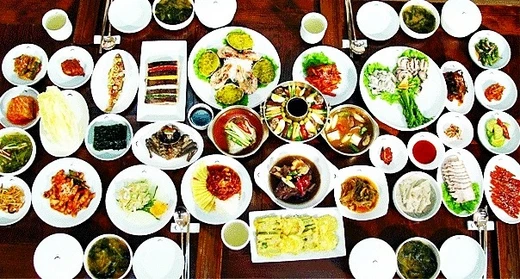
Gim (food)
Edible seaweed central to Korean cuisine and global dried seaweed market.
Gim (김), also written as *kim*, refers to edible seaweeds from the genera *Pyropia* and *Porphyra* that are dried for use in Korean cooking. Alongside *miyeok* and *dasima*, it ranks among Korea’s most farmed and consumed seaweeds. Today, Korean gim makes up about 70% of the worldwide market for dried seaweed, with major buyers including the United States, Japan, and China.
The earliest written mention of edible seaweed in Korea appears in the *Memorabilia of the Three Kingdoms* (1280s), a Goryeo-era text covering the Three Kingdoms period (57 BCE–668 CE). It notes that people of the Silla era included gim in their dowries, and scholars believe this gim was gathered from rocks and driftwood rather than farmed. Later, the *Veritable Records of the Joseon Dynasty* frequently mentions gim, calling it *haeyi* (海衣), meaning “sea cloth” or “sheet.” A geographical survey under King Sejong the Great listed gim as a signature product of Chungcheong, Gyeongsang, and Jeolla Provinces. The records also tell of King Seonjo being urged to ease the burden on eastern coastal people forced to produce gim as a royal tribute, and of King Hyojong suspending that tribute after learning a single sheet cost twenty pieces of cotton. Because officials demanded gim of a specific size, people would glue sheets onto frames using saliva or other adhesives to meet the requirement. King Jeongjo, concerned about hygiene, warned provincial governors not to enforce fixed sizes. Gim also appears in non-royal writings. In *Baekheonjip*, Yi Kyŏngsŏk (1595–1671) wrote a poem about receiving gim as a gift, comparing its thinness to paper. In *Seonghosaseol*, scholar Yi Ik (1681–1764) described gim as reddish algae growing on sea rocks that was processed into sheets. A 19th-century Joseon cookbook, *Siuijeonseo*, records seasoning gim with sesame oil mixed with red pepper powder and sesame seeds, then sprinkling sesame seed or pine nut powder, drying, and roasting before serving.
Farming of gim in Jeolla and Gyeongsang Provinces is documented in 15th- and 16th-century books such as *Sinjeung Dongguk Yeoji Seungnam* (1530) and *Gyeongsang-do Jiriji* (1425), where it is described as a regional delicacy. Gim cultivation is Korea’s oldest form of aquaculture, with oral traditions explaining its origins. One story tells of an old woman in Hadong, South Gyeongsang Province, who saw a log covered in gi
- field
- Edible seaweed / Korean cuisine
- nationality
- Korean
- known_for
- Dried seaweed sheets used in gimbap, banchan, and as a major export
- earliest_mention
- 1280s (Memorabilia of the Three Kingdoms)
- main_production_area
- Wando, South Jeolla Province, South Korea
- annual_production
- ~19,500 tonnes (dried) in South Korea
Lore & Background
The earliest mention of edible seaweed in Korea is recorded in the Memorabilia of the Three Kingdoms (1280s), which documents that people of the Silla period used gim for part of their dowries. It is conjectured that gim of this period was harvested from rocks and driftwood rather than being cultivated. Gim was later mentioned numerous times in the Veritable Records of the Joseon Dynasty, where it is referred to as 海衣, meaning sea cloth or sheet. A geographical survey during the reign of King Sejong the Great described gim as a representative product of Chungcheong, Gyeongsang, and Jeolla Provinces. King Seonjo was urged to soothe the hardship of eastern coastal people required to produce gim as a royal offering, and King Hyojong suspended the royal submission upon hearing that a single piece cost 20 pieces of cotton. King Jeongjo warned governors not to enforce specific offering sizes after people glued gim onto frames to fit size requirements.
Reader's Guide
Gim cultivation is the oldest aquaculture in Korea. Oral traditions tell of an old lady in Hadong who discovered a log covered in gim floating down the Seomjin River, inspiring cultivation on bamboo poles. Another legend names Gim Yeoik (1606–1660) as the first cultivator after seeing a drifting oak branch covered in gim. Early methods using bamboo or oak sticks were replaced by nets in the 19th century, inspired by gim growing on fish fences in Wando. Floating rafts have been used for mass production since the 1920s. The modern sheet form was invented in Asakusa, Edo (Tokyo) around 1750, influenced by Japanese paper-making. Today, most commercial gim is cultivated, with Pyropia yezoensis being the most common species. Gim is known for high protein, thiamine, riboflavin, vitamins A, B6, B12, iodine, iron, and essential amino acids. It is used in gimbap, toasted as banchan, or deep-fried as bugak. The red algae genus is also consumed in Japanese cuisine as nori and in Chinese cuisine as haitai.
Did You Know?
- Gim accounts for approximately 70% of the global dried seaweed market.
- The earliest mention of edible seaweed in Korea is in the Memorabilia of the Three Kingdoms (1280s), where it was used in dowries during the Silla period.
- King Hyojong suspended royal submission of gim after learning a single piece cost 20 pieces of cotton.
- The modern sheet form of gim was invented in Asakusa, Edo (Tokyo) around 1750, influenced by Japanese paper-making.
Frequently Asked Questions
What is Gim (food) and what makes it special?
Gim is dried edible seaweed harvested from the Pyropia and Porphyra genera, forming thin sheets that are a staple of Korean cooking. It sits alongside miyeok and dasima as one of Korea's three most cultivated and eaten seaweeds.
Where is Gim (food) mainly grown?
The primary production region for Korean gim is Wando in South Jeolla Province. South Korea produces roughly 19,500 tonnes of dried gim each year.
What role does Gim (food) play in Korean cuisine?
Gim appears as the wrapping for gimbap, as a seasoned banchan, and as an ingredient or snack across countless Korean recipes. Its versatility makes it one of the most frequently used seaweeds in everyday Korean meals.
Why is Gim (food) such a big deal on the world stage?
Korean gim accounts for approximately 70% of the global dried seaweed market, with the United States, Japan, and China as its largest buyers. This dominance makes it one of Korea's most significant food exports.
How far back does the history of Gim (food) go?
The earliest written reference to edible seaweed in Korea appears in the Memorabilia of the Three Kingdoms, a Goryeo-era text dating to the 1280s. That document describes people of the Silla era consuming seaweed, pushing the documented history back to the Three Kingdoms period (57 BCE–668 CE).
More in Korean cuisine 1-24
Spotted an error? Know more?
This is a living reference — every entry is fact-audited, and reader corrections feed straight into our audit queue. Suggest an edit · See this site's audit record